A missing tooth changes more than your smile. It can affect how you chew, how clearly you speak, and how confident you feel in everyday moments. If you are weighing a dental crown or bridge for missing tooth concerns, the right answer depends on one key detail: whether the tooth can still be saved or whether it needs to be replaced.
That distinction matters because a crown and a bridge do different jobs. A dental crown covers and protects an existing tooth. A dental bridge replaces a missing tooth by anchoring to neighboring teeth or dental implants. Patients often use the terms interchangeably, but the treatment planning is very different, and choosing well starts with understanding what each option is designed to do.
Dental crown or bridge for missing tooth: what is the difference?
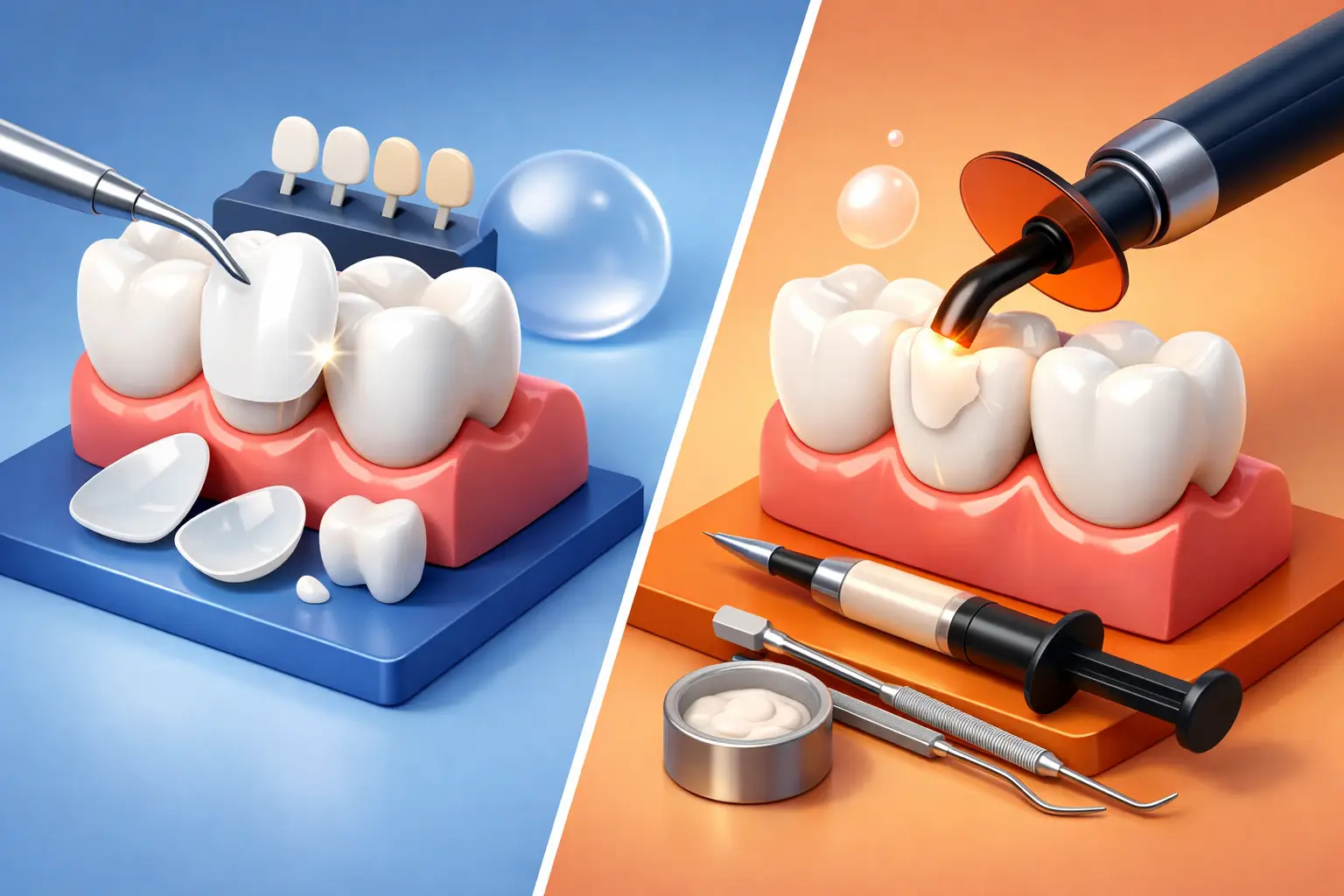
A crown is a custom restoration that fits over a damaged, weakened, or heavily restored tooth. Think of it as a protective outer shell made to restore strength, shape, and appearance. Crowns are commonly recommended after a root canal, for a cracked tooth, or when a large filling no longer provides enough support.
A bridge, by contrast, is used when a tooth is already missing. A traditional bridge includes one or more artificial teeth held in place by crowns on the teeth next to the gap. The goal is to restore function and appearance without leaving open space that can affect your bite.
This is why the phrase dental crown or bridge for missing tooth can be confusing. If the tooth is truly gone, a crown alone does not replace it. A bridge can. A crown may still be part of a bridge, but it is not a standalone replacement for an absent tooth.
When a crown may still be the better option
Sometimes a tooth looks hopeless but is still treatable. If enough healthy structure remains above or below the gumline, a crown may restore the tooth successfully and allow you to keep your natural root. In many cases, preserving your own tooth is worth serious consideration.
That said, it depends on the condition of the tooth. A crown works well when the foundation is stable. If there is severe fracture, advanced decay below the gumline, significant bone loss, or repeated failure of prior dental work, saving the tooth may not be predictable long term.
This is where a detailed exam becomes essential. Digital imaging, bite analysis, and a close evaluation of the gums and supporting bone help determine whether a crown offers a durable solution or only a temporary one. For many patients, the question is not simply which option costs less today. It is which treatment is more likely to stay healthy and functional years from now.
When a bridge makes sense for a missing tooth
A bridge is often a practical option when one tooth is missing and the neighboring teeth already need crowns or substantial restoration. In that situation, a bridge can solve multiple problems at once. It restores the gap, supports chewing, and improves the overall appearance of the smile.
Treatment is generally more efficient than implant therapy, and in many cases the timeline is shorter. For busy adults who want a fixed solution without surgery, that can be very appealing. A bridge also feels secure compared with a removable partial denture.
Still, a bridge has trade-offs. Traditional bridges rely on the teeth next to the missing space, which means those teeth usually need to be reshaped to support the restoration. If the adjacent teeth are healthy and untouched, some patients prefer to avoid altering them. A bridge also does not replace the root of the missing tooth, so it does not stimulate the jawbone in the same way a dental implant can.
The role of dental implants in the conversation
Patients often start by asking about a dental crown or bridge for missing tooth replacement, then learn there may be a third option: an implant-supported crown. In this approach, a dental implant replaces the root and a crown is placed on top. For a single missing tooth, this can be an excellent long-term solution because it restores the tooth without depending on neighboring teeth.
Implants are not always the immediate answer for every patient. Bone quality, medical history, healing timeline, budget, and personal preference all matter. Some patients want the shortest path to a fixed tooth. Others want the most conservative option for adjacent teeth. Others are looking for the longest-lasting solution possible. There is no one-size-fits-all answer, which is why personalized planning matters.
How to decide between a crown, bridge, or implant
The best choice usually comes down to five factors: the health of the remaining tooth structure, the condition of nearby teeth, bone support, esthetic goals, and long-term value.
If the natural tooth can be predictably saved, a crown may be the most conservative and appropriate path. If the tooth is missing and the neighboring teeth need restoration anyway, a bridge may be an efficient, attractive solution. If the tooth is missing and the adjacent teeth are healthy, an implant-supported crown often deserves serious consideration.
Appearance matters too, especially in visible areas of the smile. A well-designed restoration should blend naturally in shape, contour, and color. That requires more than simply filling a space. It requires careful treatment planning and an artistic eye so the final result feels like your smile, not just dental work.
What the process usually looks like
For a crown, treatment typically involves preparing the tooth, taking precise impressions or digital scans, placing a temporary restoration if needed, and then seating the final crown once it is ready. The final restoration is adjusted for fit, comfort, and bite so it feels natural in everyday use.
For a bridge, the process is similar, but it includes the supporting teeth on either side of the gap. Those teeth are prepared, the area is scanned or impressed, and a temporary bridge may be worn until the final bridge is placed. Once complete, the bridge should restore comfortable chewing and a balanced smile.
If implant treatment is part of the plan, the timeline is different. The implant must integrate with the bone before the final crown is attached. In some cases, same-day solutions are possible, but that depends on anatomy, stability, and the overall treatment plan.
At San Clemente Dental Associates, patients often appreciate having these options evaluated in one place with advanced imaging and restorative planning that takes both health and appearance seriously.
Cost matters, but so does value
It is reasonable to ask about price early in the process. Crowns, bridges, and implants carry different fees, and insurance coverage can vary. A bridge may cost less upfront than an implant in some cases, while a crown on a salvageable tooth may be the most cost-effective route if the prognosis is strong.
But lower upfront cost does not always mean better long-term value. If a compromised tooth fails soon after being crowned, or if a bridge places extra stress on teeth that later need more treatment, the real cost can rise over time. A thoughtful recommendation should consider durability, maintenance, and the likelihood of future dental work.
Questions worth asking at your consultation
A good consultation should leave you feeling informed, not pressured. Ask whether the tooth can be saved predictably, how long each option is expected to last, what maintenance is involved, and how the treatment will affect nearby teeth and bone. You should also ask how the final result will look, especially if the tooth is visible when you smile.
If you feel anxious about treatment, mention that too. Comfort matters. A gentle approach, clear communication, and options for sedation can make a major difference in how confident you feel moving forward.
Choosing the right solution for your smile
If you are trying to decide on a dental crown or bridge for missing tooth concerns, start with a simple principle: save what can be saved, and replace what cannot in the most stable, healthy, and natural-looking way possible. The best treatment is the one that fits your oral health, your goals, and your life.
A well-planned restoration should do more than fill a gap. It should let you eat comfortably, smile freely, and trust that your dental work was designed with precision and care. That peace of mind is often what makes the decision feel clear.